Gravel Driveway vs. Paved Driveway: Which Is Better for Your Virginia Property?
Which driveway option is best for your property?
Choosing between a gravel and paved driveway isn't simply about appearance. Cost, maintenance, drainage, traffic, property size, and how the driveway will be used can all influence which surface makes the most sense.
For some properties, a paved driveway provides the finished appearance and low day-to-day maintenance the owner wants. For others—particularly longer driveways, rural properties, larger lots, and access areas—a properly graded gravel driveway can provide a practical and cost-effective alternative.
In this guide, H&H Outdoor Services compares gravel and paved driveways to help Virginia property owners understand the advantages, tradeoffs, and factors worth considering before starting a driveway project.

Planning a gravel driveway or improving an existing one?
Proper grading and a well-prepared base can make a major difference in how a gravel driveway performs over time.
Gravel vs. Paved Driveways: What’s the Difference?
Both gravel and paved driveways can provide reliable access to a property, but they differ significantly in cost, maintenance, appearance, drainage, and installation requirements.
Neither surface is automatically the better choice.
The right driveway depends on your property, budget, drainage, traffic, maintenance expectations, and how the area will be used.
Here’s a quick comparison before we take a closer look at each factor:
| Factors | Gravel Driveway | Paved Driveway |
|---|---|---|
| Upfront Cost | Generally lower | Generally higher |
| Installation | Often faster | Typically more involved |
| Maintenance | Requires periodic grading and additional gravel | Less frequent routine maintenance, but repairs can be more involved |
| Drainage | Can allow water to move through and around the aggregate when properly graded | Requires careful grading and drainage management |
| Repairs | Areas can often be regraded or replenished | Cracks and damaged areas may require patching or resurfacing |
| Appearance | Natural, practical appearance | Smooth, finished appearance |
| Long Driveways | Often practical for larger or rural properties | Can become significantly more expensive as driveway size increases |
| Best Fit | Rural properties, larger lots, long driveways and access areas | Properties where a smooth, finished surface is a priority |
Which Costs More: Gravel or a Paved Driveway?
In most cases, a gravel driveway has a lower upfront installation cost than a paved driveway, especially for longer driveways and larger properties.
Paved driveways typically require more materials, preparation, equipment, and installation work. As the size or length of the driveway increases, that difference can become more significant.
Why Gravel Can Be More Cost-Effective
Gravel can be particularly practical for:
- Long driveways
- Rural and larger properties
- Private access roads
- Equipment or parking areas
- Properties where extending pavement would be expensive
However, the cost of a gravel driveway still depends heavily on the condition of the property.
What Affects Gravel Driveway Cost?
Several factors can influence the final price, including:
Driveway Size
Longer and wider driveways require more material and labor.
Existing Ground Conditions
Soft soil, uneven terrain, erosion, or an existing damaged driveway may require additional preparation.
Grading & Base Preparation
Creating the proper slope and establishing a stable base are important parts of building a driveway that performs well over time.
Gravel Type & Amount
The type, depth, and quantity of aggregate required will affect material costs.
Drainage Requirements
Some properties may require additional work to properly manage water around the driveway.
Property Access
Equipment and material delivery access can also affect the complexity of the project.
The cheapest driveway isn’t necessarily the least expensive driveway over time.
Proper grading, base preparation, and drainage should be considered alongside the initial installation price.
Gravel vs. Paved Driveway Maintenance
Both gravel and paved driveways require maintenance, but the type and frequency of that maintenance can be very different.
A gravel driveway typically requires more routine attention, while a paved driveway may require less frequent maintenance but potentially more involved repairs when problems develop.
Maintaining a Gravel Driveway
Over time, vehicle traffic, rain, runoff, and normal use can cause gravel to shift or create uneven areas.
Periodic maintenance may include:
- Regrading uneven areas
- Filling potholes or low spots
- Adding fresh gravel when needed
- Repairing washouts or erosion
- Maintaining proper drainage and driveway slope
One advantage of gravel is that many worn or damaged areas can be regraded and replenished without replacing the entire driveway.
Maintaining a Paved Driveway
Paved surfaces generally require less routine grading or material replacement, but they aren't maintenance-free.
Depending on the surface and its condition, maintenance may involve crack repair, sealing, patching, drainage corrections, or eventual resurfacing.
When significant deterioration occurs, repairs can also become more extensive than simply adding and regrading aggregate.
Virginia Weather Matters
Virginia's combination of heavy rain, summer heat, freezing temperatures, and freeze-thaw cycles can affect either type of driveway.
For gravel surfaces, controlling runoff and maintaining the driveway's shape can help reduce erosion and washouts. Paved surfaces can develop cracks or other deterioration as water enters damaged areas and temperatures fluctuate.
Gravel usually requires more frequent maintenance—but repairs can often be simpler and more localized.
The better choice depends on how much maintenance you're comfortable with and the conditions of your property.
How Do Gravel and Paved Driveways Handle Water?
Water is one of the biggest factors affecting how well a driveway performs over time. Whether the surface is gravel or pavement, proper grading and drainage are essential.
A driveway should be designed to move water away from the driving surface and prevent runoff from repeatedly flowing through the same areas.
Drainage With a Gravel Driveway
Gravel provides some permeability, but that doesn't mean water will automatically drain properly.
Without the correct slope and base, heavy rain can cause:
- Washouts and erosion
- Potholes and low spots
- Gravel displacement
- Standing water
- Rutting along frequently traveled areas
Proper grading helps direct runoff away from the driveway while creating a surface that can better withstand regular traffic and changing weather conditions.
Drainage With a Paved Driveway
Pavement creates a largely impermeable surface, so water must be directed somewhere.
The driveway's slope, surrounding terrain, drainage features, and destination of runoff all need to be considered. Poor water management can contribute to standing water, erosion along driveway edges, or deterioration of the paved surface.
Why Proper Grading Matters
Regardless of the surface material, drainage should be considered before the driveway is installed—not after problems appear.
The existing terrain, driveway slope, surrounding property, and natural direction of water flow can all influence how the area should be prepared.
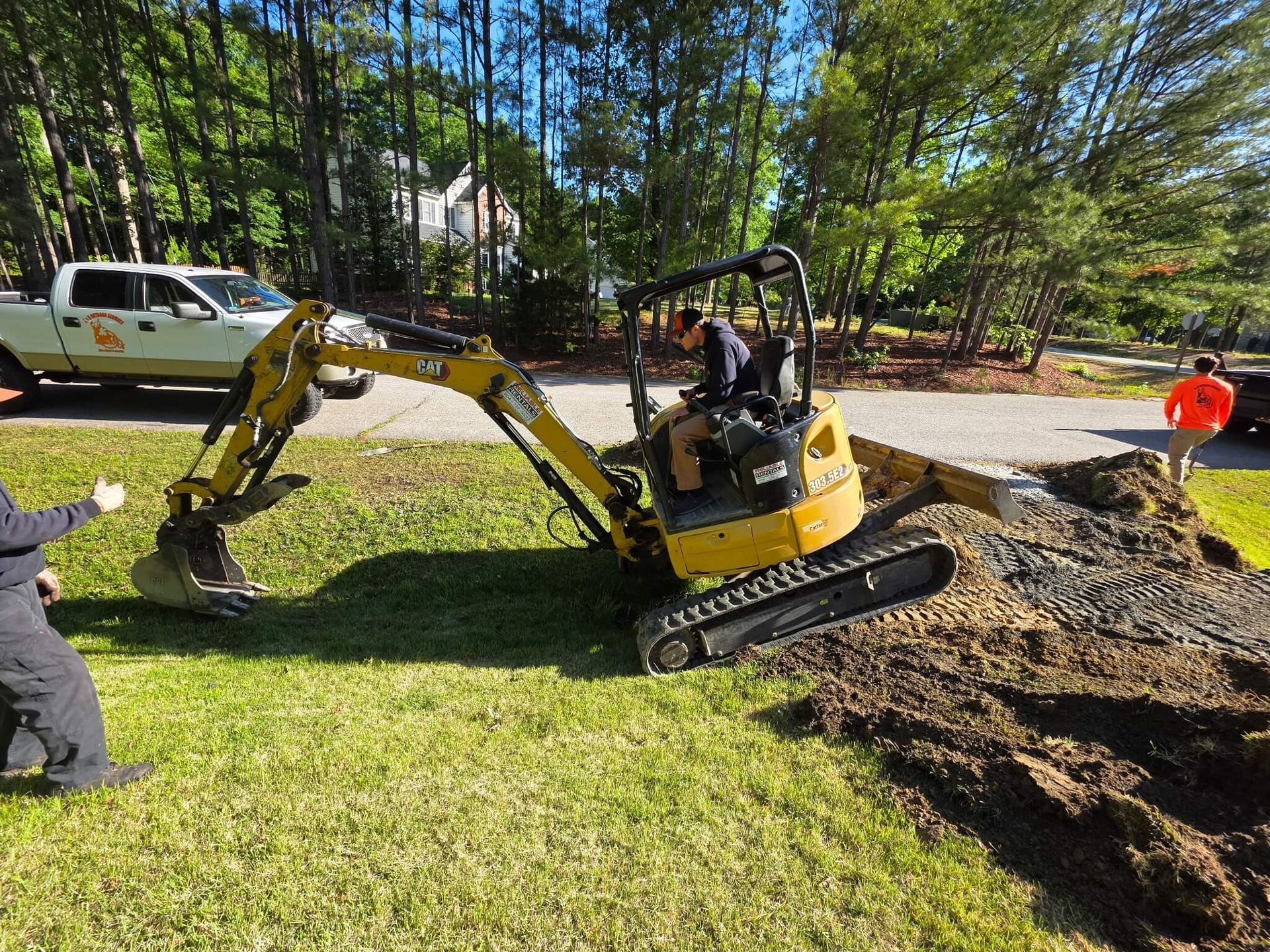
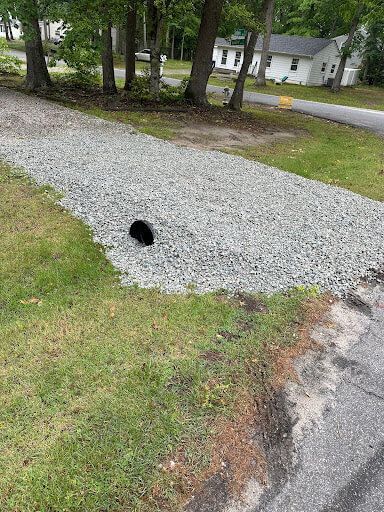
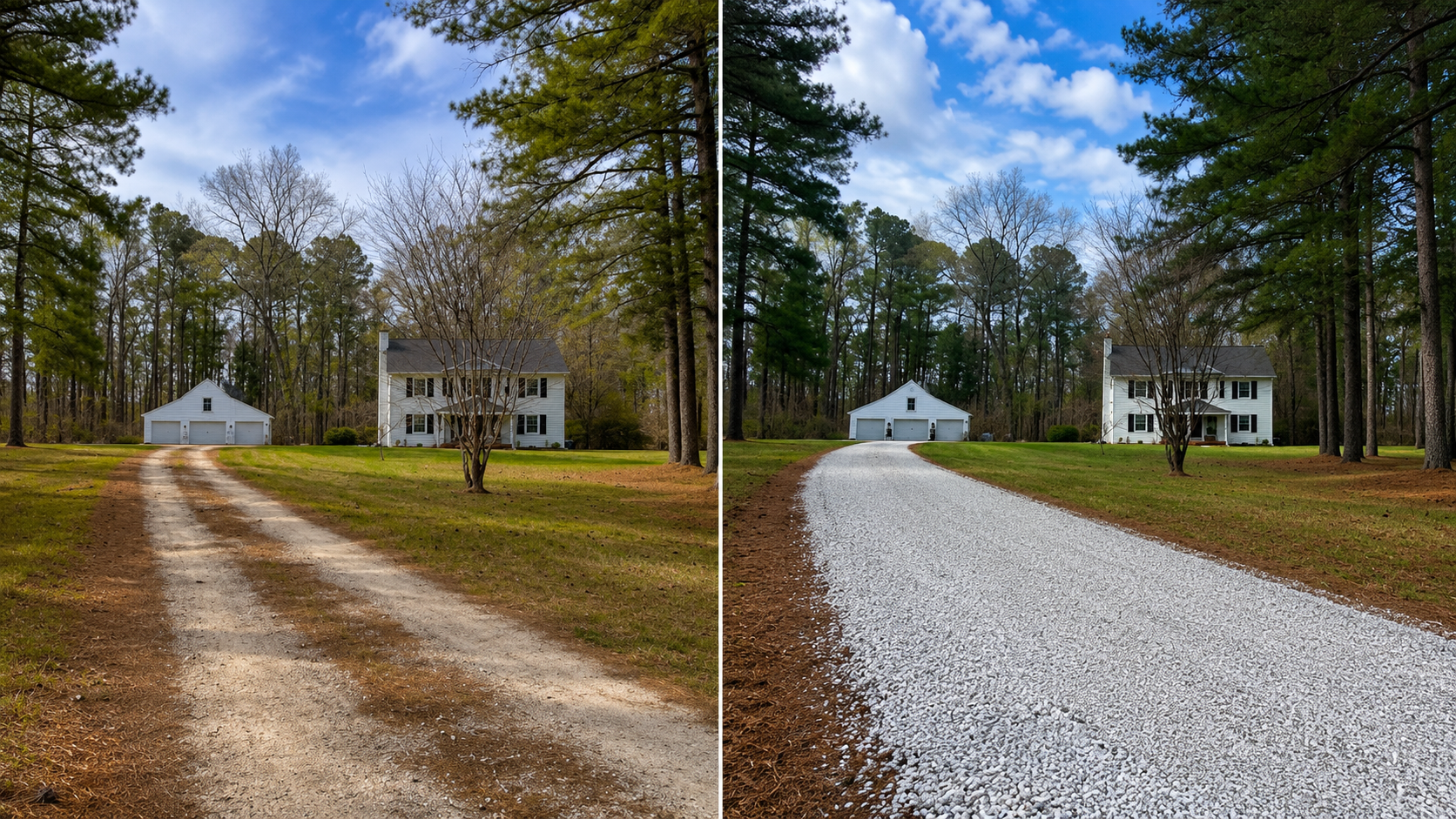
A good driveway starts below the surface.
Proper grading, base preparation, and water management can be just as important as choosing between gravel and pavement.
Which Driveway Holds Up Better in Virginia Weather?
Both gravel and paved driveways can perform well in Virginia, but weather affects each surface differently.
Heavy rain, summer heat, freezing temperatures, and repeated freeze-thaw cycles can all impact a driveway over time. How well it holds up often depends just as much on site preparation, grading, drainage, and ongoing maintenance as the surface material itself.
Gravel Driveways
One advantage of gravel is its ability to be repaired and refreshed as conditions change.
Heavy rain and vehicle traffic can gradually move aggregate, create ruts, or contribute to washouts. However, affected areas can often be corrected by adding material and regrading the surface.
With a properly prepared base and good water management, gravel can be a durable option for long driveways, rural properties, access roads, and larger sites.
Paved Driveways
A properly installed paved driveway provides a durable, smooth surface with less frequent routine maintenance.
Over time, however, temperature changes and water intrusion can contribute to cracking and surface deterioration. Once cracks develop, water can enter those areas and potentially worsen damage during freeze-thaw cycles.
Repairs may eventually require patching, sealing, resurfacing, or more extensive work depending on the condition of the driveway.
Traffic & Property Use Matter Too
Weather isn't the only consideration.
The
number and type of vehicles using the driveway can affect how it performs. Commercial vehicles, trailers, equipment, and frequent traffic may require additional attention to base preparation and driveway construction regardless of the surface selected.
Durability starts with proper preparation.
A driveway built on a stable base with appropriate grading and drainage has a much better chance of performing well through changing Virginia weather.
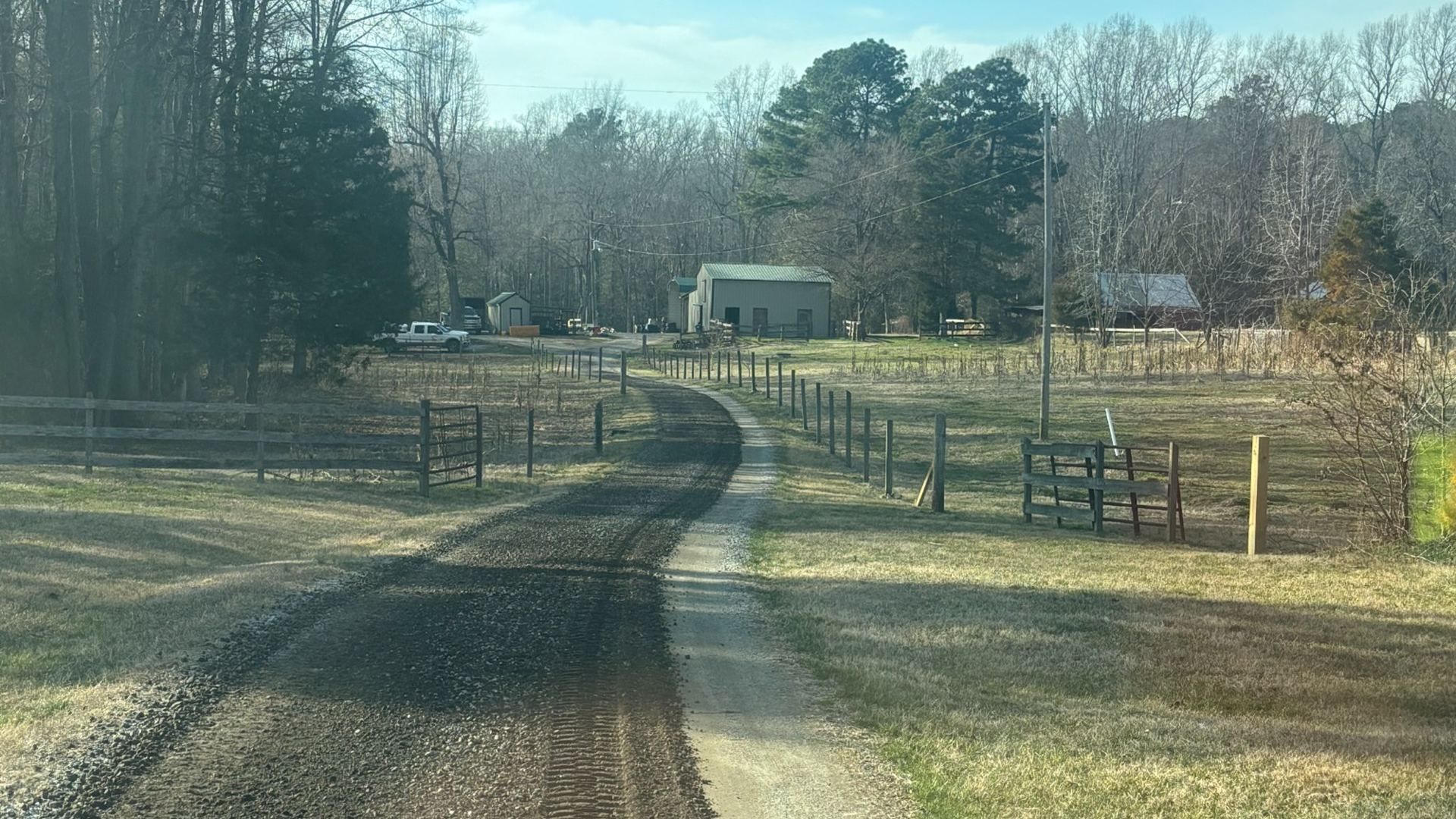
Which Driveway Looks Better for Your Property?
Appearance is another important consideration when choosing between gravel and pavement. Neither option is necessarily better—the right choice often depends on the property, surrounding landscape, and the look you want to achieve.
The Look of a Gravel Driveway
Gravel provides a more natural, traditional appearance that can work especially well with:
- Rural and wooded properties
- Larger lots and acreage
- Long private driveways
- Farms and agricultural properties
- Access roads and secondary driveways
Different aggregate sizes and materials can also influence the finished appearance of the driveway.
The Look of a Paved Driveway
Pavement provides a smooth, uniform appearance that often complements:
- Residential neighborhoods
- Shorter driveways
- Urban and suburban properties
- Properties where a clean, finished surface is a priority
For homeowners who prioritize a consistent surface with defined edges, pavement may be the preferred choice.
Consider How the Property Is Used
Appearance shouldn't be the only deciding factor.
A long driveway on several acres may have very different requirements than a short suburban driveway. Likewise, a driveway regularly used by trailers, equipment, or work vehicles may prioritize function, access, and maintainability over appearance alone.
Choose the driveway that fits the property—not just the one that looks best in a photo.
Consider the driveway's
length, location, traffic, surrounding terrain, maintenance needs, and overall purpose when comparing your options.
When Is a Gravel Driveway the Better Choice?
A gravel driveway can be an excellent option when cost, property size, access, and ease of future maintenance are bigger priorities than having a smooth paved surface.
For many properties throughout Central Virginia, gravel is especially practical when a driveway covers a longer distance or serves a larger property.
Long Driveways
The cost difference between gravel and pavement can become more significant as driveway length increases. Gravel can provide a practical way to create or improve access without paving a large area.
Rural & Larger Properties
Gravel naturally complements rural properties, wooded lots, acreage, farms, and other larger sites where a paved surface may not be necessary.
Access Roads & Secondary Driveways
Not every access point needs pavement. Gravel can work well for private roads, secondary entrances, equipment access, and other areas where function is the primary goal.
Areas Used by Equipment & Work Vehicles
Properties that regularly accommodate trailers, trucks, tractors, or other equipment may benefit from a properly prepared gravel surface that can be maintained or regraded as conditions change.
Properties That May Change Over Time
Gravel can also provide flexibility when future construction, land improvements, or changes to the property are planned. The surface can often be modified or extended more easily than a permanent paved area.
When Budget Is a Major Consideration
For larger driveway projects, gravel can offer a lower initial investment while still providing dependable property access when the driveway is properly graded, prepared, and maintained.
Gravel is especially well suited for long driveways, larger properties, rural access, and areas where practicality matters most.
The key isn't simply spreading gravel over an existing path.
Proper grading, base preparation, and drainage help create a driveway designed to perform over time.
A Better Gravel Driveway Starts With the Right Foundation
Proper grading and preparation make all the difference in how your driveway performs.
When Is a Paved Driveway the Better Choice?
While gravel offers several advantages, there are situations where a paved driveway may be the better fit.
For property owners who prioritize a smooth, finished surface and less frequent routine maintenance, pavement can offer advantages worth considering.
Shorter Residential Driveways
For shorter driveways, the higher upfront cost of pavement may be easier to justify, particularly when the driveway is part of a suburban or residential setting.
A Smooth, Consistent Surface
Pavement provides a firm, uniform surface that can be easier for walking, bicycles, strollers, and other everyday activities.
Less Frequent Routine Maintenance
Unlike gravel, pavement doesn't require periodic regrading or replenishing aggregate. Property owners who prefer less frequent routine driveway maintenance may find this appealing.
A More Finished Appearance
For some homes and properties, the clean edges and uniform appearance of pavement may better complement the surrounding architecture and landscaping.
When Gravel May Not Fit the Property
Every property is different. If maintaining loose aggregate, periodic grading, or the natural appearance of gravel doesn't align with your goals, pavement may simply be the better choice.
The best driveway isn't necessarily gravel or pavement—it's the surface that best fits your property and how you plan to use it.
Consider
cost, maintenance, appearance, drainage, traffic, driveway length, and property conditions before making your decision.
Why Proper Grading Matters for Any Driveway
Whether you choose gravel or pavement, the performance of your driveway begins before the final surface is installed.
Proper grading helps establish the driveway’s shape, slope, and drainage so water can move away from the driving surface instead of collecting in low areas or repeatedly washing across it.
Creating the Right Slope
A driveway should be graded with the surrounding terrain and natural water flow in mind. The goal is to help move water away from the surface while maintaining safe, practical access to the property.
Building a Stable Base
The condition beneath the finished driveway matters. Soft areas, unstable soil, or inadequate preparation can contribute to settling, rutting, and other problems over time.
Preparing the area properly helps create a stronger foundation for the surface above it.
Managing Water Before It Becomes a Problem
Heavy rainfall can quickly expose drainage problems.
Standing water, washouts, erosion, and deteriorating driveway edges can all be signs that water isn't being managed effectively. Addressing drainage during preparation can help prevent recurring problems later.
Preparing for How the Driveway Will Be Used
Driveway construction should also account for the traffic it will support. A residential driveway may have very different requirements from a long private road or an access area regularly used by trucks, trailers, or equipment.
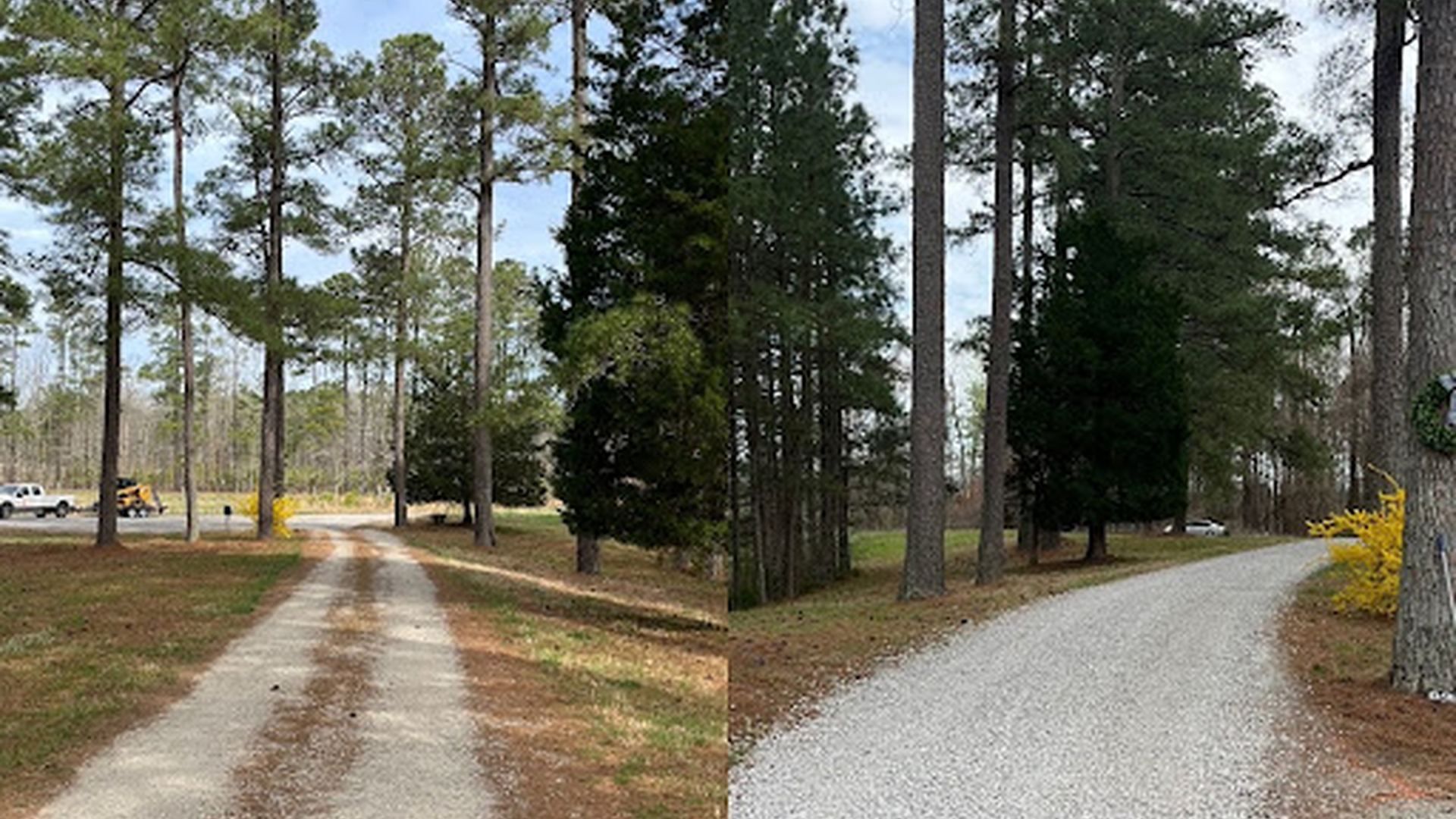
What’s underneath your driveway matters just as much as what’s on top.
Proper
grading, site preparation, and drainage create the foundation for a driveway designed to handle traffic, weather, and everyday use.
Gravel vs. Paved Driveway FAQs
Planning a Gravel Driveway or Property Improvement?
Whether you're installing a new gravel driveway, improving an existing one, or addressing grading and drainage issues, proper preparation makes the difference.
H&H Outdoor Services provides professional grading, gravel installation, driveway improvements, and site preparation for properties throughout Chesterfield and Central Virginia.
Tell us about your property and what you're looking to accomplish. We'll help determine the right approach for your project.
Property Grading | Gravel Installation | Driveway Improvements | Site Preparation
Proper Grading. Quality Materials. Built for Your Property.